
How to Read a Buick Window Sticker Like a Pro?
Search Window Sticker
Table of Contents
Key Takeaways
- A Buick window sticker provides an unalterable record of how a car was configured at the factory.
- It details the original MSRP, standard equipment, factory options, warranty specs, and official EPA mileage estimates.
- Reviewing the label helps you verify pre-owned cars and catch missing options before signing a deal.
- Missing the paper copy? You can almost always generate a replacement Buick window sticker by VIN using the car's 17-digit code.
Staring at a Buick window sticker for the first time can feel a little overwhelming. Between the dense lines of text, price breakdowns, and fuel economy numbers, there’s a lot to process. But once you know how the layout works, reading one is actually pretty simple.
If you're buying a used Buick, selling one, or simply curious about your own vehicle, learning how to read the original sticker can save you from relying on incomplete listings or guesswork. It confirms the original equipment, trim level, MSRP, colors, and much more.
You don't need a background in car sales to figure it out, either. This guide breaks down every single block of information so you can evaluate any Buick window sticker with total confidence.
What Is a Buick Window Sticker?
A Buick window sticker, frequently referred to as a Monroney sticker, is the legal document attached to the glass of every brand-new vehicle before it hits a dealer lot. Think of it as a birth certificate for the car. It tells shoppers precisely what they’re paying for, from base mechanical features to optional convenience packages.
Because this information originates straight from General Motors rather than a dealer's marketing team, it's easily one of the most reliable records you can consult to verify authentic factory specifications.
The Purpose of the Monroney Label
Federal law mandates Monroney labels across the United States to protect consumers and maintain pricing transparency.
Every factory-fresh Buick comes with one, detailing key data points such as:
- Core vehicle identification markers
- Base and total Buick MSRP
- Standard equipment inclusions
- Optional equipment and packages
- Official fuel economy ratings
- Original warranty coverage
- Crash test safety ratings
- Factory destination charges
Rather than digging through generic brochures or guessing trim tiers, buyers can check the sticker to see exactly what came equipped on that specific VIN.
Why It's Still Valuable Years Later
A lot of drivers assume window stickers lose their value the second a car leaves the lot. In reality, they remain incredibly useful throughout the vehicle's entire lifecycle.
A quick look at the sticker years down the line allows you to:
- Verify true factory-installed equipment versus aftermarket add-ons
- Confirm the genuine Buick trim level
- See what the vehicle originally cost brand new
- Double-check online used car ads against official factory records
- Validate a higher asking price when selling
- Keep classic or restoration builds completely factory-correct
If you're buying a used Buick, the sticker gives you a much clearer picture than a basic dealership description ever could.
Where Can You Get a Buick Window Sticker?
Finding the original sticker is easy if the previous owner tucked it away in the glovebox, but on most used vehicles, that paper label was tossed out years ago.
The good news? The data behind it doesn't just vanish.
On a New Vehicle
On a brand-new model, the sticker is adhered directly to a side window right at the manufacturing plant. It remains in place until the vehicle is sold, at which point the dealership or new owner usually peels it off.
If the Original Sticker Is Missing
If the physical paper is long gone, the car's VIN is your way back in.
By plugging the 17-character Buick VIN into an online Buick window sticker by VIN lookup tool, you can pull up a digital replica of the original sheet. The system queries archived factory records to match the unique code with its original build sheet.
Instead of trying to remember if a car came with a specific package, you get an accurate printout of how it was optioned at the factory.
Your VIN acts like an access key, retrieving production details that would otherwise be lost to time.
The Main Sections of a Buick Window Sticker
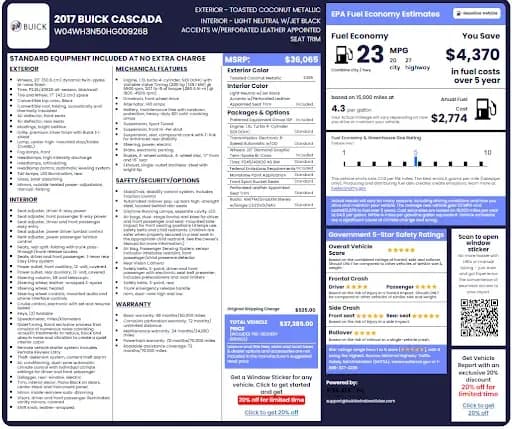
At first glance, a Buick window sticker looks busy. It's packed with small text, numerical grids, and various headers. Once you get a feel for the grid structure, reading it becomes second nature.
A standard sticker is broken up into these primary areas:
 Vehicle information
- Standard equipment
- Optional equipment
- Exterior and interior colors
- Engine and drivetrain specs
- Fuel economy estimates
- Buick MSRP breakdown
- Warranty coverage details
- Government safety ratings
- Tire and wheel information
Each box covers a distinct aspect of the car. Combined, they form a complete picture of the vehicle's original build.
Vehicle Information
Most people start here because this section defines the car's identity. While the details look basic on the surface, they are essential for validating that the document matches the actual vehicle in front of you.
Year
The model year indicates the product cycle Buick assigned to the build. Keep in mind that model years don't always align with calendar build dates; for example, a 2025 Buick might have rolled off the assembly line in mid-2024.
Model
This specifies the actual model line. Common examples include:
- Encore GX
- Envista
- Envision
- Enclave
Confirming the model line keeps you from confusing vehicles that share similar styling cues but differ in overall footprint and pricing.
Trim Level
The Buick trim level is one of the most important details on the sticker.
It tells you exactly which version left the factory.
For example, an Envision Preferred won't have the same equipment as an Envision Avenir, even though they look very similar from the outside.
Confirming the trim level helps you avoid paying premium prices for a vehicle that's actually a lower trim.
Body Style
This block outlines the general layout of the vehicle, specifying details such as:
- SUV body configuration
- Four-door layout
- Total seating capacity
- Factory drive configuration
VIN
The Buick VIN is the car’s unique 17-digit serial number. No two vehicles share the same code. It bridges the car to its factory records, titles, service histories, and window stickers.
Always take a moment to cross-reference the VIN on the document with the plate mounted on the driver-side dashboard and the door jamb sticker.
Standard Equipment
This section lists everything Buick included with the vehicle at no additional cost. In other words, these are the features that came with the chosen trim level before any extra packages or upgrades were added.
If you're comparing two used Buicks, this section helps you understand what should already be there. It also makes it easier to spot missing or replaced equipment.
Safety Features
Most Buick window stickers include a list of factory-installed safety features.
Depending on the model and year, you may see items like:
- Forward Collision Alert
- Automatic Emergency Braking
- Lane Keep Assist
- Rear Vision Camera
- Rear Park Assist
- Teen Driver Technology
Because these systems are standard for the trim, you shouldn't be charged extra for them as "optional upgrades."
Interior Features
Here, the sticker outlines the cabin conveniences included in the base MSRP. Typical listings include:
- Dual-zone climate control
- Power-adjustable driver’s seat
- Keyless push-button start
- Wireless Apple CarPlay and Android Auto
- Heated front seats
- Remote vehicle starter
Remember that the exact interior feature list expands or shrinks depending on the Buick trim level.
Exterior Features
Here you'll find the equipment that affects the vehicle's appearance and functionality.
This may include:
- LED headlights
- Roof rails
- Alloy wheels
- Heated mirrors
- Power liftgate
- Privacy glass
These features can help confirm that a used Buick still matches its original factory configuration.
Technology Features
Modern Buicks come packed with technology, and this section outlines what was included from the factory.
You might see:
- Buick Infotainment System
- Navigation
- Wi-Fi hotspot capability
- Bluetooth connectivity
- Wireless phone charging
- Premium sound system
Basically, the Standard Equipment section gives you a baseline. Everything listed here came with the vehicle before any extra options were added.
Optional Equipment and Packages
This is one of the most valuable parts of the Buick window sticker.
Unlike standard equipment, these are the upgrades the original buyer chose when ordering the vehicle. Each option usually comes with its own price, which contributes to the final Buick MSRP.
If you're shopping for a used Buick, this section explains why two seemingly identical vehicles can have very different values.
Some common factory options include:
- Panoramic moonroof
- Bose premium audio system
- Ventilated front seats
- Heated rear seats
- Adaptive Cruise Control
- Head-Up Display
- Power hands-free liftgate
- Trailering package
You'll also find option packages that bundle several features together.
For example, a package may include upgraded wheels, premium interior materials, advanced safety technology, and additional convenience features for one combined price.
Checking these packages helps you verify that a seller's description matches what the vehicle actually came with from the factory.
Exterior and Interior Colors
Color may seem like a small detail, but it's another way to verify a vehicle's originality.
The window sticker explicitly names the paint shade and cabin upholstery applied during assembly.
You'll typically find:
- Exterior paint color
- Interior color
- Seat material
- Interior trim
This data is particularly helpful if you suspect a vehicle has been repainted or reupholstered due to accident repair. If a seller claims a finish is factory-original, a quick glance at the sticker will confirm it.
Engine, Transmission, and Drivetrain
This block breaks down the vehicle's powertrain mechanics. It’s vital to review this area when shopping used, as inaccurate online specs or swapped components aren't unheard of.
Engine
This entry specifies the engine fitted at the plant. Double-checking this against the actual vehicle ensures you get the exact performance setup advertised.
Transmission
Identifying the exact gearbox installed helps you evaluate driving dynamics and stay on top of recommended service intervals.
Front-Wheel Drive vs. All-Wheel Drive
The sticker clearly identifies the car's drivetrain. It's surprisingly common for online listings to mislabel FWD models as AWD, but the factory sticker eliminates any ambiguity.
Combined, these mechanical details detail how the car was engineered to drive.
For example:
Component | What Is Listed |
Engine | Displacement (e.g., 1.2L Turbo, 1.3L Turbo, 2.0L Turbo), output specs, and cylinder layout |
Transmission | Gearbox setup (CVT, 9-speed automatic, or standard auto) |
Drivetrain | Driven wheels (Front-Wheel Drive / FWD vs. All-Wheel Drive / AWD) |
Fuel Economy Ratings
Every Buick window sticker features an EPA block outlining estimated fuel consumption. These metrics offer a standardized baseline for comparing efficiency across different model years and engines.
While real-world mileage fluctuates based on driving habits and maintenance, you'll find three core figures:
- City MPG: Expected efficiency during stop-and-go driving with frequent idling and braking.
- Highway MPG: Expected mileage during sustained cruising speeds on open highways.
- Combined MPG: A weighted average blending city and highway cycles. (This is usually the main number buyers focus on).
Newer stickers also feature projected annual fuel expenses and environmental greenhouse gas scores.
MSRP Breakdown Explained
Another detail a lot of people are interested in is the vehicle's original price.
Instead of showing one total, the sticker breaks down how Buick arrived at the final Buick MSRP, including:
- 1.Base MSRP: The entry price for that specific trim level before any add-ons, colors, or packages are applied.
- 2.Cost of Optional Equipment: An itemized list showing the added price of every factory option (like Bose audio, panoramic roofs, or towing packages).
- 3.Destination Charge: A standardized fee set by GM to cover the transport of the vehicle from the factory to the dealership floor.
- 4.Total MSRP: The sum of all parts (Base MSRP + Options + Destination Charge).
For used car buyers, the original total MSRP is a good reference point for measuring overall depreciation and market value today.
Warranty Information
Many Buick window stickers also include a summary of the original factory warranty.
Even if the coverage has already expired, it's still useful to know what protection came with the vehicle when it was new.
You'll commonly find information about:
- Bumper-to-bumper warranty
- Powertrain warranty
- Corrosion protection
- Roadside assistance
Warranty coverage varies by model year, so the exact terms shown on the sticker may differ from one Buick to another. Knowing the original warranty also helps you understand the level of factory support the vehicle received during its early years.
Safety Ratings
Newer Buick window stickers often include government safety ratings.
These ratings come from crash testing programs and help buyers compare the safety performance of different vehicles.
Depending on the model year, the sticker may display ratings for:
- Overall vehicle safety
- Frontal crash protection
- Side crash protection
- Rollover resistance
Alongside these ratings, you'll often see advanced driver assistance features that were installed at the factory.
If you're comparing multiple used Buicks, this section provides another useful point of comparison beyond engine size or trim level.
Tire and Wheel Information
The window sticker also lists the factory tire and wheel specifications. This helps confirm that the vehicle still has the correct equipment installed.
You'll typically find details such as:
- Tire size
- Wheel size
- Wheel material
- Temporary spare tire, if equipped
This information is especially helpful if you're replacing tires or checking that aftermarket wheels haven't changed the vehicle's original setup.
QR Codes, Barcodes, and Factory Codes
Near the bottom or side of many modern Buick window stickers, you'll notice several codes that don't mean much at first glance.
These can include:
- QR codes
- Barcodes
- Factory production codes
- Dealer inventory codes
Most buyers never need to use them, but they're important during manufacturing, shipping, and dealership inventory management.
Some QR codes can also provide quick access to vehicle information when scanned with a compatible device.
While these codes aren't something you'll reference every day, they're another reminder that the window sticker is much more than just a price label. It serves as a complete factory record for that specific Buick.
How to Verify a Used Buick Using the Window Sticker?
If you're buying a used Buick, don't stop at looking at the mileage or checking how clean the interior is. A Buick window sticker lets you compare what's in front of you with how the vehicle actually left the factory.
It only takes a few minutes, and it can help you spot inaccurate listings or missing equipment before you commit to the purchase.
Here's a simple checklist to follow.
- 1
Confirm the Trim Level
Start by checking the Buick trim level listed on the window sticker. Sometimes a seller may advertise a higher trim because the vehicle has similar-looking wheels or aftermarket accessories. The window sticker removes the guesswork by showing the original trim assigned at the factory. - 2
Check the Engine and Drivetrain
Compare the engine, transmission, and drivetrain on the sticker with what's currently in the vehicle. Everything should match the factory specifications. - 3
Verify the Factory Options
Look through the optional equipment section and make sure the vehicle actually has those features. For example, if the sticker lists a panoramic moonroof or Bose premium sound system, those features should still be present. - 4
Compare the Colors
Check that the exterior paint and interior colors match the factory information. A different color doesn't automatically mean there's a problem, but it could indicate repainting or major repairs. - 5
Review the Original MSRP
The original Buick MSRP gives you a better idea of how the vehicle was equipped when new.
A Buick with several premium packages originally cost much more than a base model, which can help explain price differences in today's used market.
Basically, the window sticker helps you confirm that the Buick you're looking at is actually the Buick being advertised.
Why Every Used Buick Buyer Should Read the Window Sticker?
A Buick window sticker isn't just useful for one type of owner. It helps almost everyone involved with the vehicle.
Shopping for a Used Buick
The sticker confirms the original specifications, equipment, colors, and Buick MSRP, making it much easier to compare listings and verify the seller's claims.
Selling Your Buick
Sharing the original window sticker gives buyers confidence.
Instead of answering questions about factory options or packages one by one, you can simply provide the document that shows everything in one place.
Restoring a Buick
If you're bringing an older Buick back to factory condition, the window sticker is one of the best references you can have.
It helps confirm the original paint color, equipment, trim level, and installed options.
Building a Complete Vehicle Record
Many owners like keeping important documents together.
Adding the original window sticker alongside maintenance records, ownership documents, and service receipts creates a more complete history for the vehicle.
Conclusion on Reading Buick Window Stickers
Learning how to read a Buick window sticker isn't as complicated as it first appears. Once you understand what each section represents, you can quickly verify the vehicle's original specifications, factory options, pricing, and warranty information.
If the original sticker is no longer with the vehicle, you don't have to rely on guesswork. A Buick window sticker by VIN can help you retrieve the factory information tied to your specific vehicle, making it easier to buy, sell, or simply learn more about your Buick with confidence.